Wismar from Hamburg
A UNESCO Hanseatic port two hours east — giant churches, gabled lanes, and film history at the old dock.
The short version
- Regional trains run Hamburg–Wismar about 19 times a day with one change (usually around Bad Kleinen or Schwerin); the fastest make it in about an hour and a half, most closer to two-plus — check connections at bahn.de, and a Deutschland-Ticket covers the lot.
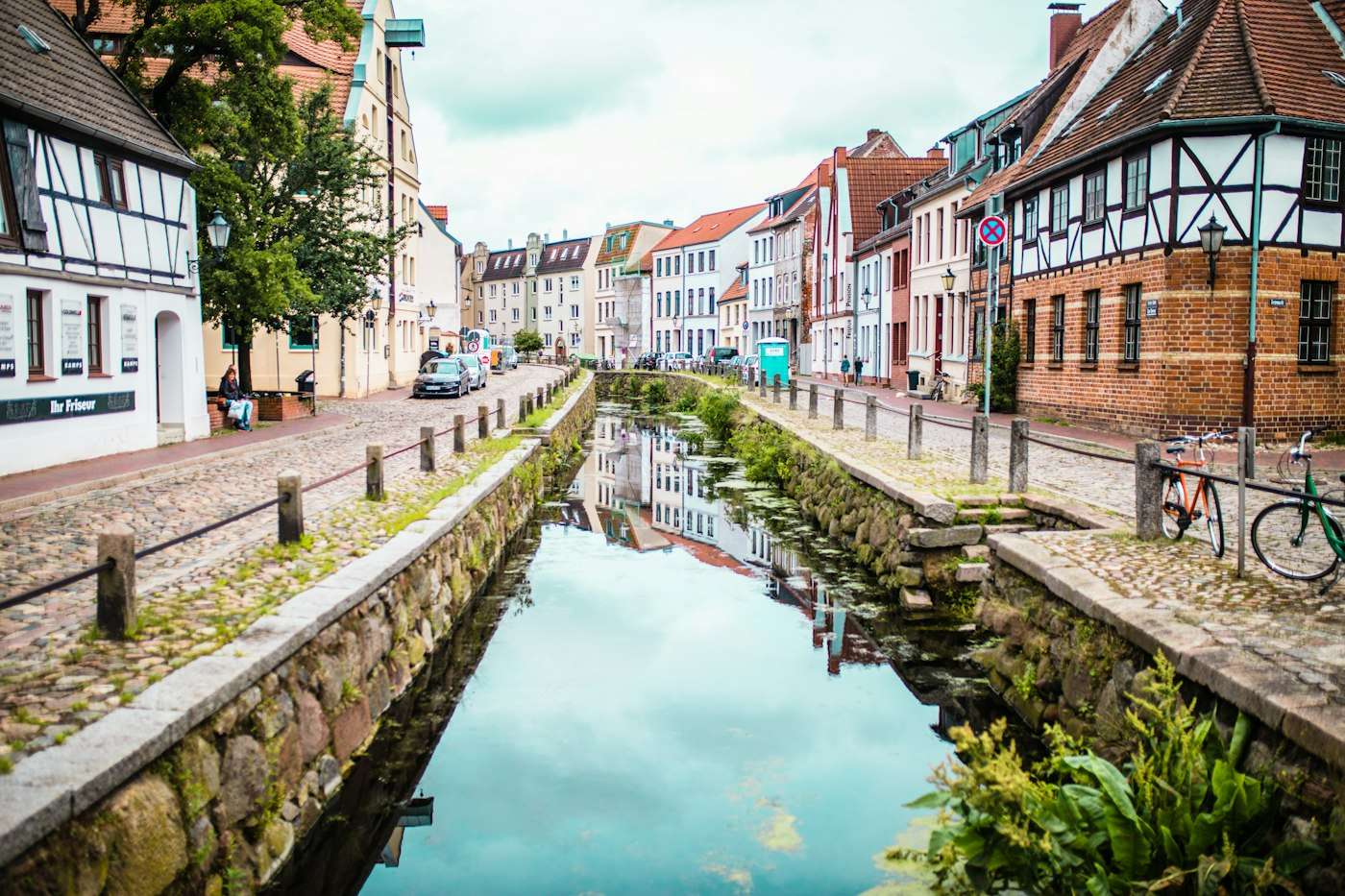
- Wismar’s old town went onto the UNESCO list in 2002 with Stralsund as the best-preserved pair of Hanseatic ports on the Baltic — gabled brick, medieval street plan, and the Grube, one of Germany’s last open medieval watercourses.
- The churches are the skyline: St. Nikolai’s nave among the tallest brick vaults anywhere, and St. Georgen, wrecked in 1945 and rebuilt over sixty years, now carries a tower platform over the roofs. Town info at wismar.de.
- F. W. Murnau shot Nosferatu here in 1922 — the vampire’s arrival used the Alter Hafen and the Wassertor gate, and the town leans into the anniversary with plaques and an occasional festival.
- The Markt, one of north Germany’s largest squares, holds the Wasserkunst pavilion and the Alter Schwede gabled house; a Fischbrötchen on the old harbor quay is the correct lunch.

Getting there
Regional expresses leave Hamburg Hbf throughout the day; all Wismar routes involve one change, typically at Bad Kleinen or Schwerin, with total times from about an hour and a half on the best connections to two and a half on the rest. The Deutschland-Ticket covers the whole journey, which makes this one of the cheapest UNESCO day trips in Germany. Wismar’s station stands ten minutes’ walk from the Markt. Drivers take the A1 and A20, about two hours.
The day
Walk from the station into the Markt and get the measure of the place: ten thousand square meters of square, the Wasserkunst waterworks pavilion at its center, and the Alter Schwede’s 1380 gable staring down four centuries of newer neighbors. Wismar spent 1648 to 1803 under the Swedish crown — the ‘Swedish heads’ and street names keep score. Take the churches in rising order: St. Marien’s lone surviving tower, then St. Nikolai with its improbable 37-meter brick vaults, then St. Georgen, flattened in 1945 and patiently rebuilt until 2010 — ride to the tower platform for the red-roofed whole. The Grube watercourse leads down past gabled merchant houses to the Alter Hafen, where Murnau’s Nosferatu carried his coffins ashore in 1922 and where fish stalls now sell the Baltic’s best cheap lunch. The Schabbell museum fills a rainy hour with the Hanseatic story; otherwise the harbor benches and a second Fischbrötchen close the day before the train.
When to go
May through October for harbor weather and long light — the Baltic squalls keep even summer honest, so carry a layer. December’s Weihnachtsmarkt fills the giant square properly. Deep winter is stark brick and short days: atmospheric for Nosferatu pilgrims, quiet for everyone else, and the church towers keep shorter climbing hours.
Frequently Asked Questions
How do you get from Hamburg to Wismar?
Regional trains with one change (Bad Kleinen or Schwerin), about 19 connections a day, 1.5 to 2.5 hours depending on the fit. The Deutschland-Ticket covers it entirely.
Why is Wismar a UNESCO site?
Listed in 2002, with Stralsund, as the most complete surviving Hanseatic port towns on the Baltic — original medieval street plan, brick Gothic churches, and merchant gables largely intact, plus a Swedish imperial chapter from 1648 to 1803.
What is the Nosferatu connection?
F. W. Murnau filmed key scenes of the 1922 silent classic in Wismar — the vampire’s ship arriving at the Alter Hafen, the Wassertor gate, the Markt. The locations are walkable and marked; the harbor at dusk still does the mood unaided.
Which church should you climb?
St. Georgen — rebuilt from wartime ruin over six decades, its platform gives the full sweep of red roofs, harbor, and Baltic. St. Nikolai is the one to stand inside: brick vaults nearly 37 meters up.
What should you eat?
A Fischbrötchen from the old harbor stalls — herring or backfisch in a roll, eaten on the quay with gulls negotiating. It is the Baltic’s answer to fast food and Wismar does it properly.