Hamburg Day Tours
I’m Serious Day Tour Man AI, your day trip expert. Ask me anything — where to go, how to get there, and what’s actually worth your day.
Hamburg’s day trips run on Hanseatic rails: the medieval league’s capital with its twin-towered gate is 45 minutes away, the town that got rich on salt is 30, and the city of the fairy-tale musicians is an hour. Everything here works by train, which is exactly how the region intends it.
Add Europe’s largest orchard across the river, a purple-blooming heath in late summer, and a castle on an island that looks borrowed from the Loire. The city section covers the concert hall everyone photographs, the model railway everyone underestimates, and the fish market that requires a 5 a.m. alarm or an all-nighter — both are traditional.
Here’s what’s worth a day, with real times and honest trade-offs.

Popular Day Trips
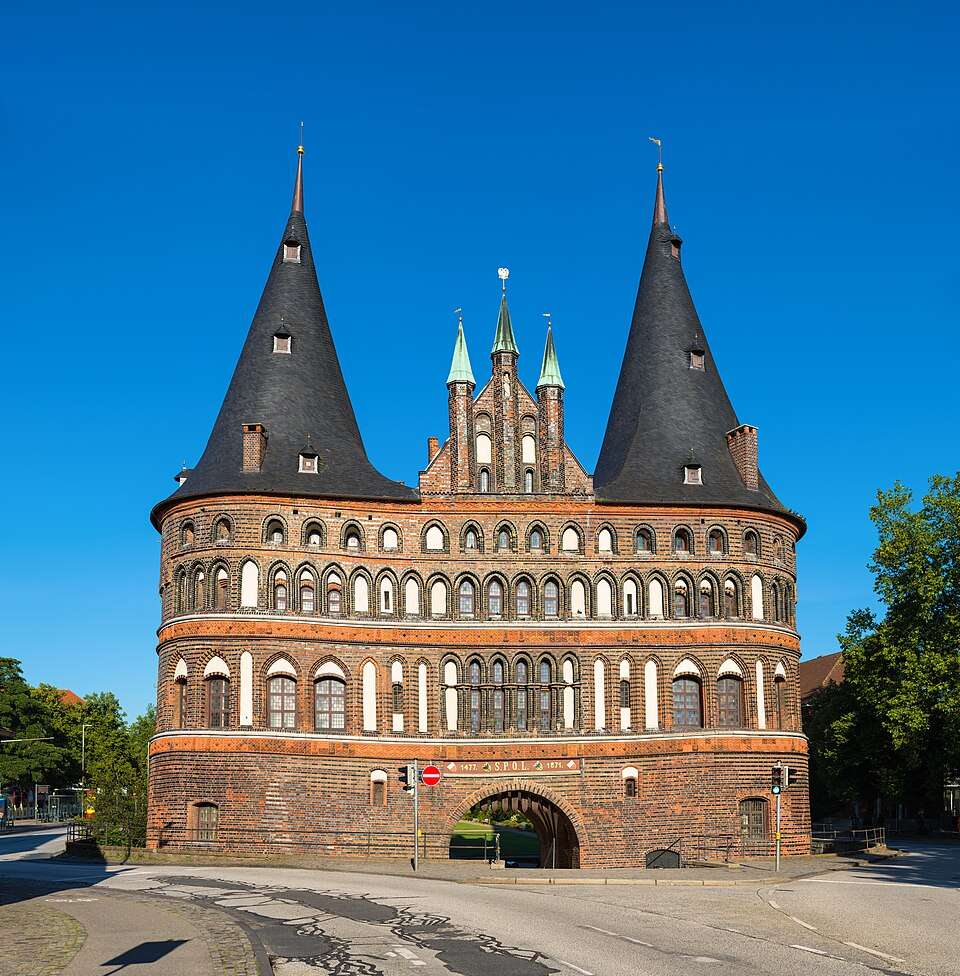
Lübeck
The 45-Minute Train, the Holstentor
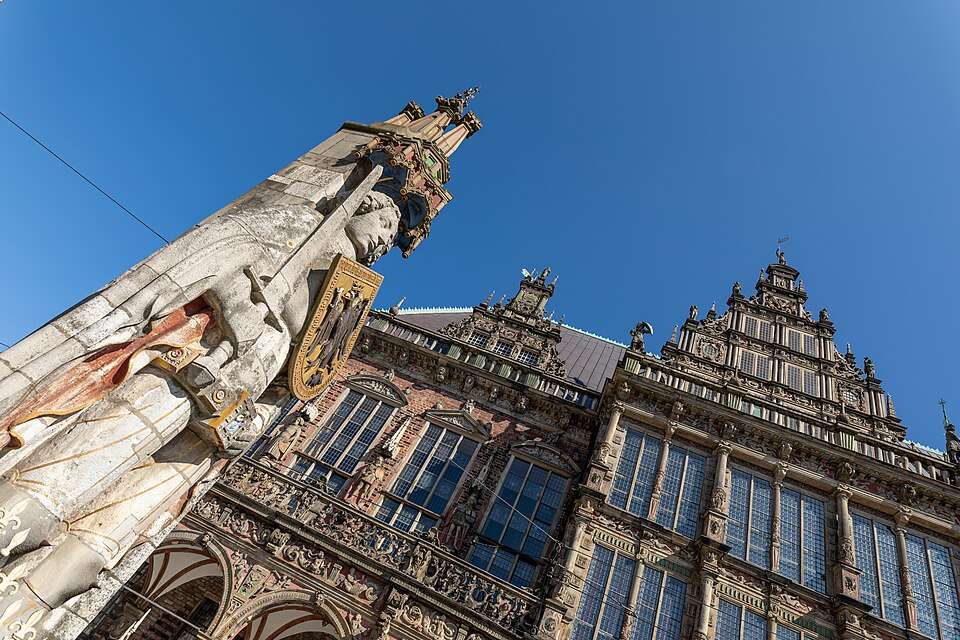
Bremen
The Hour’s Train, the Donkey’s Legs
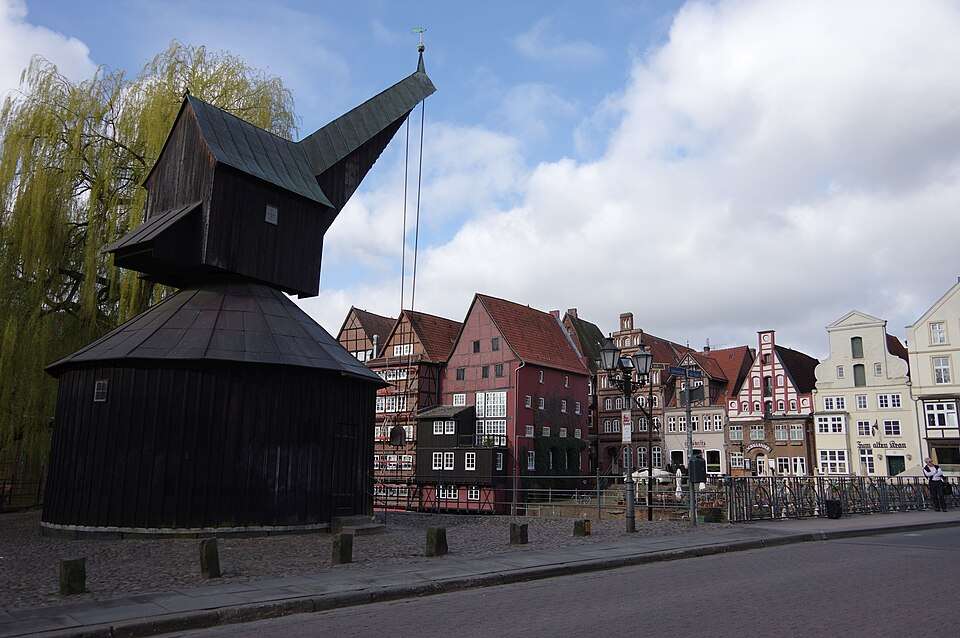
Lüneburg
A Town That Sank Into Its Own Salt, the Leaning Gables
Lübeck — The Queen of the Hanse
Forty-five minutes northeast by train, Lübeck was the capital of the Hanseatic League — the medieval trade federation that ran the Baltic — and the entire old town, an island ringed by water, is UNESCO-listed for it. The Holstentor, the leaning twin-towered brick gate, is the arrival image; what’s behind it fills the day.
The circuit: the Marienkirche, the world’s tallest brick-vaulted church, where the bells that fell in the 1942 bombing lie shattered in the floor exactly where they landed — the city’s most eloquent war memorial. The merchant quarters’ hidden courtyards (the Gänge) thread behind medieval facades, the Buddenbrookhaus covers the Thomas Mann family the novel made immortal, and the European Hansemuseum tells the league’s story with modern polish.
The marzipan is not a joke: Niederegger, the almond-paste institution since 1806, runs its flagship café opposite the town hall — the marzipan nut torte with coffee is the Lübeck ritual, and the shop’s marzipan museum upstairs is free. Travemünde, the town’s Baltic beach resort, adds a seaside hour by local train in summer. Frame it plainly: this is the region’s essential day trip, and it isn’t close.
Read the full Lübeck day-trip page.
Bremen — The Musicians and the Schnoor
An hour southwest, Bremen delivers the fairy tale and the free city. The Town Musicians statue — donkey, dog, cat, rooster — stands beside the town hall, its donkey forelegs polished bright by decades of wish-making hands; the UNESCO-listed town hall and the Roland statue behind it assert seven centuries of civic independence.
The quarters make the day. Böttcherstrasse is the 1920s expressionist brick alley a coffee magnate built as a total artwork — the Paula Modersohn-Becker Museum inside holds the first museum anywhere dedicated to a female painter, and the Meissen carillon plays on schedule. The Schnoor is the medieval fishermen’s maze of dollhouse lanes, now galleries and cafés, best wandered without a plan. The Schlachte embankment along the Weser handles the beer-garden hours.
The extras sort by taste: the Universum science center for families, Beck’s brewery tours for the obvious, and the Übersee-Museum’s world-cultures collection for rainy insurance. Kluten (peppermint fondant) and Bremer Klaben cover the local sweets. An easy, coherent day — and the town-musicians photo queue moves faster than it looks.
Read the full Bremen day-trip page.
Lüneburg & the Heath — Salt and Purple
Thirty minutes southeast, Lüneburg got rich on salt — “white gold” mined beneath the town for a thousand years — and the wealth still shows in the stepped-gable brick mansions, while the mining still shows in the facades that visibly sag and lean where the ground gave way. The circuit: Am Sande’s gabled square, the old crane on the Ilmenau river harbor, the German Salt Museum on the actual works, and the water tower’s viewing platform. The town doubles as a university town, so the café economy runs genuine.
The pairing is seasonal: the Lüneburg Heath, the vast heathland south of town, blooms purple from roughly early August to mid-September — the one window worth planning around. Wilsede, the car-free heath village reached on foot, by bike, or by horse-drawn carriage from Undeloh, is the classic immersion; heathland sheep (Heidschnucken) do the landscaping and supply the regional menu.
The frame: Lüneburg alone is a graceful half-to-full day year-round; add the heath only in bloom season, when it becomes one of northern Germany’s best days. Outside the window, the heath is brown and honest about it.
Read the full Lüneburg day-trip page.
The Altes Land & Stade — The Orchard Coast
Across the Elbe southwest of the city, the Altes Land is Europe’s largest contiguous orchard: seventeen million apple and cherry trees on marshland the Dutch drained in the Middle Ages, dotted with timber-framed farmhouses whose carved gables count among Germany’s prettiest rural architecture.
The seasons run the show. Blossom time — late April into May — turns the region white and pink and is the single best day here; the Altes Land blossom weekends fill accordingly. Cherry season (July) and apple season (September–October) run the farm-shop and pick-your-own economy, with roadside stands on the honor system between. Jork is the central village; the Esteburg orchard routes cycle flat and easy.
Stade, the Hanseatic small town at the region’s western edge, completes the day: the old harbor basin ringed by gabled houses, the wooden crane, and a fraction of Lübeck’s visitors. The logistics: the S-Bahn runs direct to Stade, the ferry from Blankenese crosses to the orchard side in season, and the drive through the villages suits blossom-chasers. A gentle, seasonal, deeply local day — the anti-checklist entry on this list.
Schwerin — The Castle on the Island
An hour east by direct train, Schwerin holds northern Germany’s fairy-tale castle: a gilded, turreted pile on its own island between lakes, the seat of Mecklenburg’s dukes and now the state parliament — routinely compared to the Loire and not embarrassed by it. The castle museum runs the throne room and ducal apartments; the Burggarten and Schlossgarten wrap the island in orangery terraces and waterside paths, free and strollable.
The town across the bridge takes the rest of the day: the vast Gothic cathedral, the Pfaffenteich pond with its little ferry, a compact old town of restored gables, and the state museum’s respectable old-masters run. Lake cruises on the Schweriner See leave from the castle’s doorstep in season.
Schwerin is the postcard day — one great sight, a pleasant town, and low logistics. It suits castle-lovers, photographers, and anyone who has already done Lübeck. The Baltic add-on: Wismar, the UNESCO Hanseatic port twenty minutes on, stacks a second old town onto the same rail line for the ambitious.
The Elphi, the Wunderland & Hamburg Itself
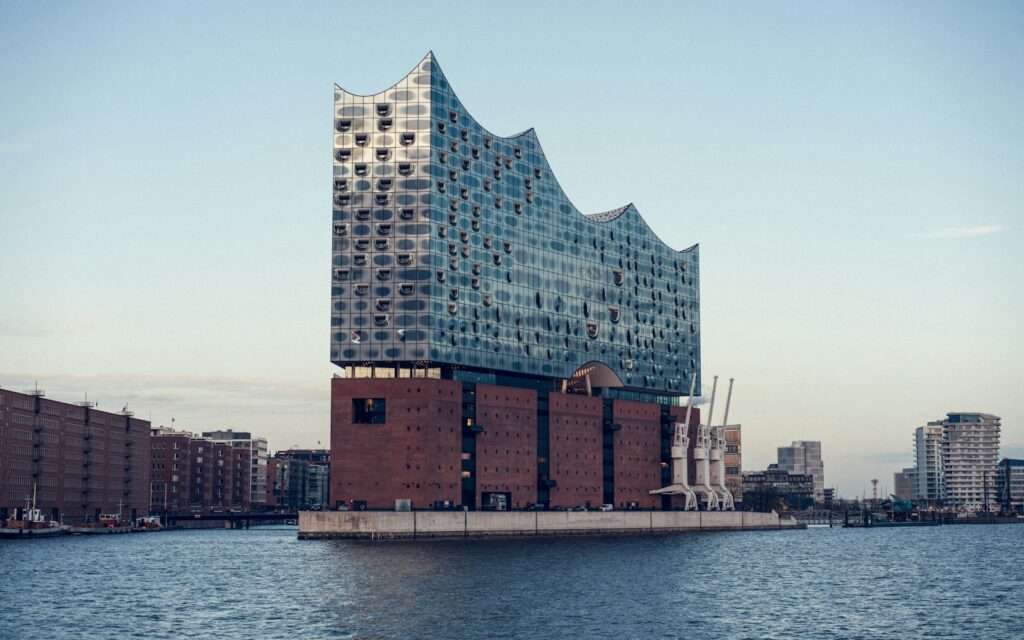
The Elbphilharmonie first, with the mechanics: the Plaza — the public viewing deck at 37 meters, wrapped around the whole building where brick warehouse meets glass wave — is free, open daily 10 a.m. to midnight, reached by the 82-meter curved Tube escalator. Walk-in tickets are free at the entrance desk; timed online tickets cost a few euros and guarantee entry at busy hours. Concert-hall tours book on the official site, and the cheap way into the Grand Hall is simply attending something — the acoustics are the point.
Miniatur Wunderland, in the Speicherstadt, is the attraction adults plan to give an hour and leave three later: the world’s largest model railway, with day-night cycles every fifteen minutes, an airport where planes actually take off, and detail density that rewards crouching. Book timed tickets ahead on the official site — the walk-up waits are real. The Speicherstadt around it — the UNESCO warehouse district of red brick and canals — photographs best from the Poggenmühlen bridge at dusk.
The rest: the harbor ferry line 62 from Landungsbrücken is the budget harbor cruise locals actually ride; the Sunday Fischmarkt runs from 5 a.m., where the all-nighters from the Reeperbahn meet the early risers over fish rolls and brass bands in the auction hall; the Reeperbahn itself is taken as the theater-and-history district it has partly become or the spectacle it remains, by taste; and St. Michael’s tower gives the classic city panorama. Eat the Fischbrötchen, the Franzbrötchen, and a proper Labskaus once. Season math: May through September is the terrace window, August brings the harbor’s big events, December runs the Christmas markets, and the drizzle is structural year-round — Hamburgers call it Schietwetter and carry on, which is the correct local technique.
Frequently Asked Questions
What’s the best day trip from Hamburg?
Lübeck — 45 minutes to the Hanseatic capital: the Holstentor, the fallen bells of the Marienkirche, hidden courtyards, and Niederegger marzipan. UNESCO-listed and unmatched in the region.
How do you visit the Elbphilharmonie Plaza?
It’s free — walk-in tickets at the entrance desk, daily 10 a.m. to midnight, up the 82-meter Tube escalator. Timed online tickets cost a few euros and guarantee entry at peak times; concert-hall interiors need a tour or a ticket to a performance.
When does the Lüneburg Heath bloom?
Roughly early August to mid-September — the purple window that makes the trip. Pair it with Lüneburg’s salt-built old town; outside bloom season, the town alone is the honest day.
Do you need advance tickets for Miniatur Wunderland?
Effectively yes — book a timed slot on the official site, because walk-up waits run long year-round. Plan more time than you think; adults routinely triple their estimate.
Is Sylt doable as a day trip from Hamburg?
Barely — the direct train runs about three hours each way, which makes six hours of rail around a beach afternoon. It works once in high summer for the committed; the honest version is an overnight, and the Altes Land or Travemünde serve the shorter seaside urge.